For Men and Fathers
Find out how you want to be a man, without losing yourself along the way.
“You don’t have to know what kind of man you’re supposed to be. You’re allowed to find out who you are.”
Being a man today
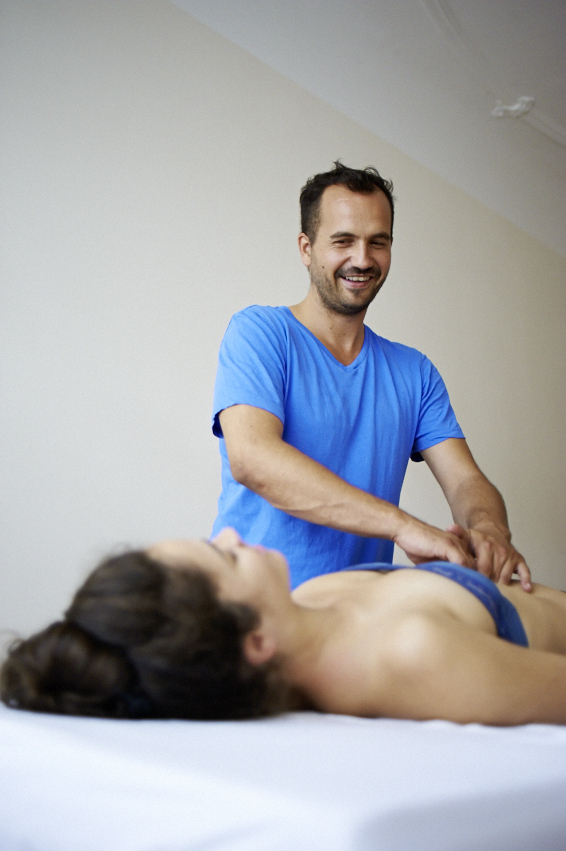
What it means to be a man today is more open than ever. Old images no longer hold, new ones are still taking shape. That is an opportunity. It can also be unsettling: as a partner, as a father, at work, in dealing with your own strength. In this offer we explore these roles through the body. You learn to notice what they trigger in you and to see where you lose yourself in them.
“You can function. But how are you, really?”
Why this matters to me.
I became a father late in life. I know how much this stage shifts everything: sleep, relationship, work and your own sense of who you are. I don’t have answers for you, but I offer a space in which you can find your own.
– Adrian
No fixed image of manhood.
I have no fixed idea of what a man should be today, and I don’t want to impose one on you. What interests me is what you wish for: your ideas about being a man, what you want to keep and what you want to leave behind. It helps if you are open to what your body shows you. I look forward to meeting men who show me their own answers. The body helps to tell apart what is truly yours and what you have merely learned.
“With the first child, a couple becomes a triangle. Every side wants to be felt anew – including yours.”
What we explore.
- Inner navigation: sensing where you want to go, rather than just meeting expectations.
- Love: allowing closeness without dissolving in it.
- Strength: perceiving your own power and using it consciously.
- Violence: We often experience violence internally, turned against ourselves and indirectly against others. Difficult experiences often hold a suppressed impulse to defend ourselves. We learn to integrate this potential instead of suppressing it.
- Inner independence: staying with yourself, even when others want something from you.
- Differentiation: Couples therapist David Schnarch uses this term for the ability to stay connected in a relationship while keeping a separate self. We practise it where it shows up first: in the body.
Why the body?
My work is connected to ideas that move many people today. Physician Gabor Maté describes how, as children, we often put attachment above authenticity and later pay the price through adaptation and exhaustion. Psychiatrist Bessel van der Kolk has shown that difficult experiences do not only stay in memory but continue in the body. And Peter Levine, founder of Somatic Experiencing, describes how unfinished defensive movements – the fighting or fleeing that was not allowed to happen – keep acting in the body.
This is especially relevant for men. Many have learned to control their feelings and hold back their strength, often without knowing where to put it. Through the body, what the mind understood long ago becomes tangible – and can change.
“An app can explain a lot. An encounter shows you how it feels.”
How it works.
- Getting to know each other: 15 minutes, free of charge. Book by email at adrian@beingabody.com.
- First sessions: We clarify what matters to you and set a goal together.
- Learning process: 75-minute sessions at my practice in Prenzlauer Berg. Online sessions are possible after at least five sessions in person.
Further reading.
- Gabor Maté: When the Body Says No – on the link between adaptation, suppressed emotions and stress
- Gabor Maté: The Myth of Normal – on attachment and authenticity in an overwhelming culture
- Bessel van der Kolk: The Body Keeps the Score – on how difficult experiences live on in the body
- Peter Levine: In an Unspoken Voice – on unfinished defensive responses and the way back into the body
- David Schnarch: Passionate Marriage – on differentiation in long-term relationships
The authors are mentioned for context, not as a method I offer.